A public sculpture and AR gateway for Thorpe Meadows, Peterborough — commissioned by Nene Park Trust, funded by National Lottery and ACE and co-designed with Year 9 students from Nene Park Academy, elevating overlooked small nature to monumental scale.

THE COMMISSION
Public sculpture at Thorpe Meadows, Peterborough, sited near existing works including Peterborough Arch and the untitled doors sculpture. Co-designed with 12 Year 9 students from Nene Park Academy across two full-day workshops (September), supported by sixth-form student leaders. Scale: a few feet taller than an average person — working figure ~8 feet, withinbudget and health & safety limits.
Site & access
Off the A1260 at Junction 33 (signed for Thorpe Wood / Holiday Inn), close to Longthorpe Parkway and the River Nene. Open meadow / rough grassland setting, main lake running north–south, footpath alongside. On-site mobile signal is strong — ~148 Mbps down / ~3 Mbps up, 30ms latency (tested 21 July) — no barrier to a data-rich AR experience.
Key people
CONCEPT, CONTEXT & LINEAGE
A novel portal — an interactive gateway that also reads as alive, like a flower or other natural form, bold in colour, with height and potentially "glowing" lure with coloured acrylic to draw the eye from the road. The opening at its centre is a 2.5D AR mural designed with the students and printed with real physical relief, not a flat image.
We're elevating the forms and patterns of small nature but it's also a commentary on our own moment.
The sculpture is trying to draw you in with a pretty picture just like a social media app or television does. With AI agents, deep fakes, social media, screen addiction we are drifting toward superintelligence while we doomscroll. In this design the AI isn't rendered as anything humanoid or benign; it takes the form of a manipulative monster, using a hypnotic lure — something that pulls you in and holds you there, like a social media feed.
We'll work as a team to decide what this entity would put on it's lure to entice passers by. We'll look to the Thorpe Meadows environment for inspiration as "it" knows we love our green spaces.
The forms are digital, but the hand that made them isn't absent: everything begins as drawings from the workshop, plus VR sculpting, drawn in real space through human movement, before it becomes anything else. That gesture stays legible in the final piece — proof a person was standing inside the work before a machine ever touched it.
Past related work can be seen below:
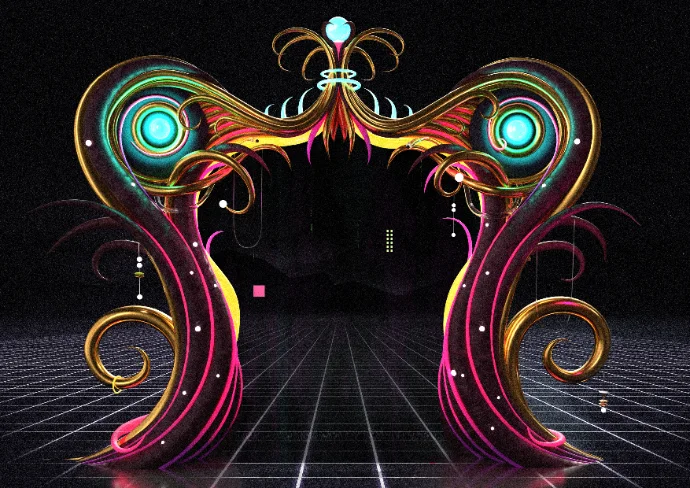
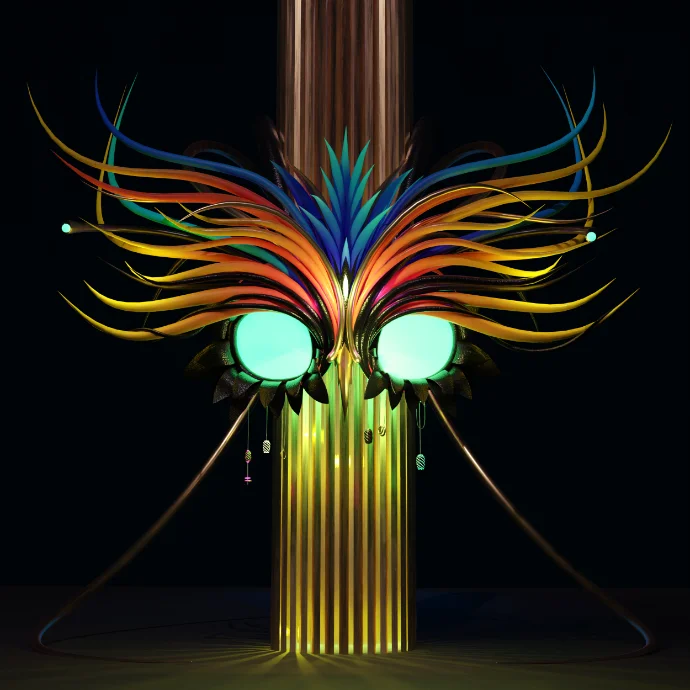
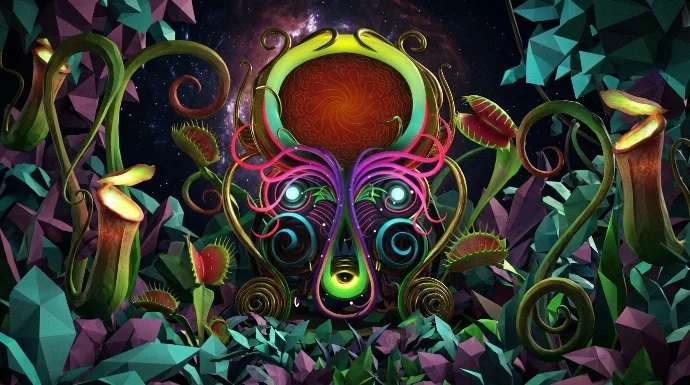
// Reference works are visual touchstones for tone, not literal targets. Possible portal forms: tunnel, doorway, gate, circular moongate.
The Iris
The Iris — an earlier gateway-like piece exploring glowing, eye-like forms and swirling organic structure. It's a useful visual and conceptual touchstone for how this commission's portal opening reads as alive. Still available.
[ VIEW THE IRIS ]The Mona Portals
Small-scale 3D-printed pieces that proved out the portal form before this commission's much larger fabrication. A direct precedent for taking the portal concept off-screen and into real material. 50x sold to a single collector in New York.
// Past AR pieces — quick video references
ON PAPER
Early hand-drawn portal explorations (paper, pen/marker) — generic archway forms, moongate rings, tree/flower/eye-shaped openings — and iPad concept sketches developing the portal-as-living-thing idea further. These trace the route from a plain arch shape toward the current bold, organic, insect/nature-inspired portal concept.

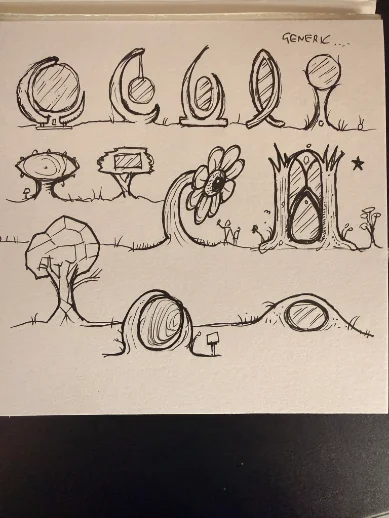
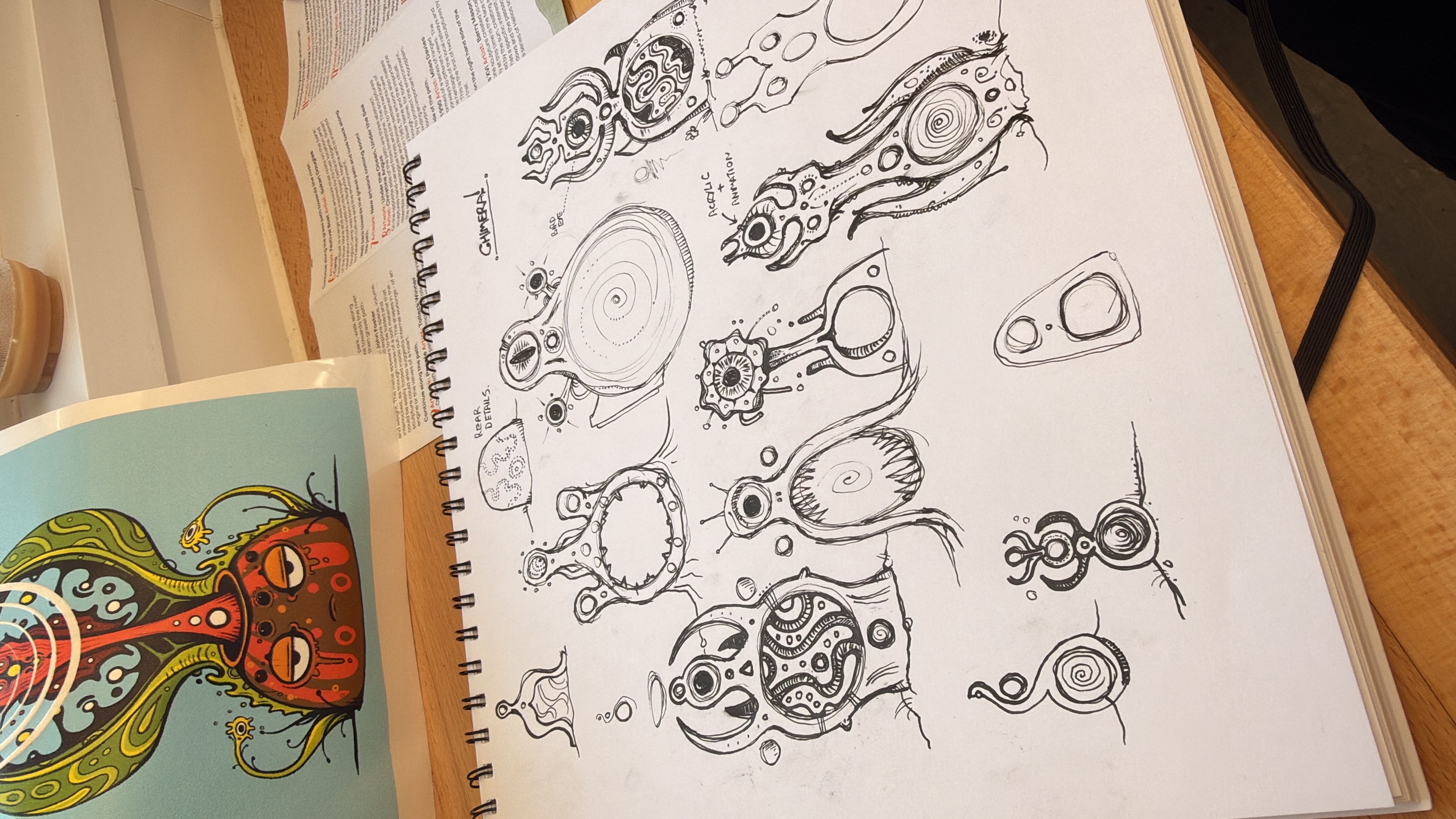
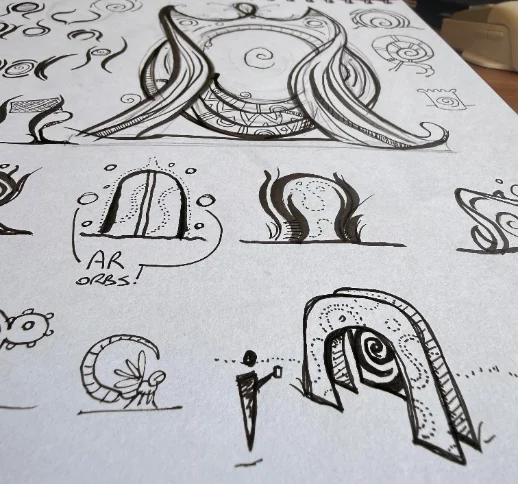
EXPLORING STEEL SHEET FABRICATION
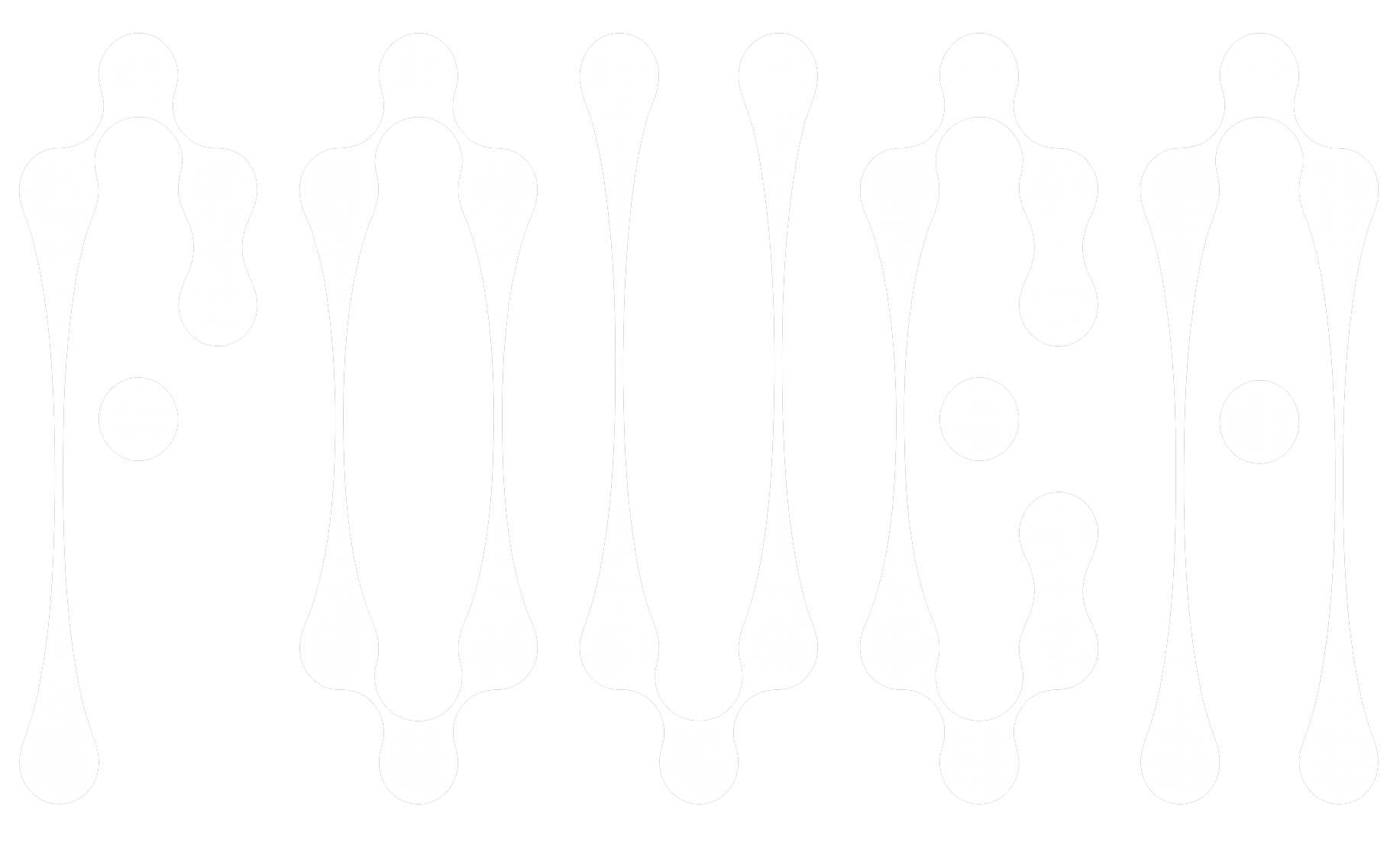
Five parametrically-generated portal designs (Portals A–E) developed in Blender as profile-cut steel plate assemblies, plus four imported Gravity Sketch models (working titles: door, FenPortal, Flower, Moongate). All designs carry a solid matte marker panel at the centre — non-negotiable, no holes or cut-outs, to preserve AR image tracking.
More conventional load path — the simpler structural route.
Structurally more complex (higher centre of pressure, greater overturning moment, needs a pedestal stem) but better aligned with my wider portal/medallion/mandala body of work.
METAPHYLA GALLERY
A simple showcase of past sculptures related to this new one.
Resin consultation — Photocentric [ OPEN FULL Q&A ↓ ]
// Full technical Q&A with Photocentric's lead engineer — material weathering, structural role, production limits and end-of-life, in their own words.
Technical Q&A with the lead engineer at Photocentric on large-format resin printing for permanent outdoor installation — weathering, structural role, segmenting, and end-of-life.
Do your resins have UV stabilizers built in, or would this need a protective top coat for long-term outdoor exposure?
Yes, but a protective topcoat would be beneficial.
What's the temperature tolerance range — how does the material handle frost and brittleness in winter versus softening or creep in summer heat?
Depends on the material — we have quite a lot of customers in the automotive sector using DL110H material on parts on the outside of cars, which should have similar environmental requirements.
How does the resin handle water ingress and years of rain cycling — is it fully sealed, or slightly porous?
Sealed. Some resins do absorb water however. You can check the water absorption in the various material datasheets on our website.
What is the nature of any warping or colour change?
Warping is a possibility but very variable depending on geometry — try and keep wall thicknesses consistent on the part. Resins can colour change through time and UV exposure as all plastics do, but you'd need to check specific resins. We keep a sample of most resins outside in our car park for this purpose if you wanted to look at a specific real-world example.
Can it be negated by printing thicker walls?
Uniform walls are normally the best bet — they shrink at the same rate.
The sculpture requires a strong metal core — a vertical steel plate with two supporting poles either side. Do you know anyone local with experience in large-scale permanent outdoor sculptural installations, as opposed to props or prototypes?
No, though there are plenty of local metal fabrication companies around who can help.
How would printed resin sections interface with a steel frame and helical screw pile foundations?
You could glue the resin over the steel peg — epoxy glue is normally good. You could also bolt them on, though spread the load into the plastic using a washer and ideally a compliant element such as a spring washer to account for any contraction of the material.
Could the resin ever play a load-bearing structural role, or should it be treated purely as cosmetic cladding over steel?
Yes, it could be load bearing for light loads. We have printed furniture before — tables, lecterns etc. Check the mechanical properties for mechanical strength for your use case.
What's the maximum build volume and dimensions for a single piece?
Our LC Titan is our largest machine — build volume of 695 × 385 × 1200 mm.
Would larger forms need segmenting and bonding, and if so, how does that affect strength at the joins?
Yes. We frequently do this with a glue joint — it can be made as strong as the original material.
What would lead time and cost look like at this scale?
Referred to the sales team — awaiting response.
At end of life, can the resin be recycled or reprocessed, or does it become landfill?
Currently no, however we are looking at novel reuse methods. A cured photopolymer is a thermoset — chemically crosslinked — so it cannot be melted and reformed like a thermoplastic, and conventional mechanical recycling does not apply. Photocentric is pursuing three routes in response: minimising scrap at the source by packing platforms densely and returning uncured resin to the vat; energy recovery, since photopolymers have a high calorific value and combust cleanly in energy-from-waste facilities; and designing in recyclability from the outset, developing chemistries with cleavable bonds that could let a cured network be broken back down into reusable oligomers.
Do you offer a plant-based resin (DL902?) suitable for large-scale outdoor structural use, and how does its durability compare? Does an "eco" resin make much difference to the immediate environment once installed outdoors?
DL902 should be a good choice — it's one of our best performance materials regardless of being plant based. We also offer DL240 Rigid plant-based resin, though it's a harder material. No material should leach anything out, so it shouldn't have an impact on the environment once installed outdoors — we have materials tested in food and drink packaging applications where leaching is not allowed.
Random idea — is there anything that can be done with surface texture or finish to encourage moss, lichen, or fungal growth over time, or would that compromise the material's integrity?
Yes, surface texture is easy to apply, and we do it on most of our parts. You can apply custom textures in Blender easily, or BumpMesh by CNC Kitchen is a good free tool for testing. It would be easy to test different textures to see what grows well, though it could be worth trying to imitate an existing stone texture or similar. It may not hold enough water to be a growth medium — but maybe that could all be done with texture.
❓ How the mural panel physically integrates with the sculptural structure.
Questions to send with the mockup
To go out alongside the rough 3D mockup files — the goal is to pin down what's realistically achievable within the £8,000 build budget.
▸ Based on the attached mockups, what's a realistic all-in fabrication quote — materials, labour, galvanising/finishing, delivery to site?
▸ Arch vs. moongate: which structural form actually costs less to fabricate and install at this scale, and by how much?
▸ Is the hybrid approach (profile-cut steel plate + bonded 3D-printed ASA detail) realistic within budget, or does it push cost significantly higher than an all-steel build?
▸ What level of detail/complexity can the plate-cutting process handle before cost rises sharply — where's the practical low-poly cutoff?
▸ Can the solid marker panel (for AR tracking) be integrated into the steel frame directly, or does it need a separate mounting sub-structure — and what does that add to cost?
▸ Helical screw pile foundation — does your team install these, or do we need a separate groundworks contractor? Rough cost either way?
▸ What's a realistic lead time from finalised design to installation-ready, given the September/October timeline?
▸ Coloured glass/acrylic "beacon" inserts — feasible to fit safely into the plate structure, and what would that add to cost and lead time?
▸ Galvanised steel vs. stainless — cost difference at this scale, and any durability trade-offs worth knowing for an outdoor public site?
▸ Any design changes you'd recommend purely to bring cost down, without compromising the concept?
THE "LURE" MURAL DESIGN
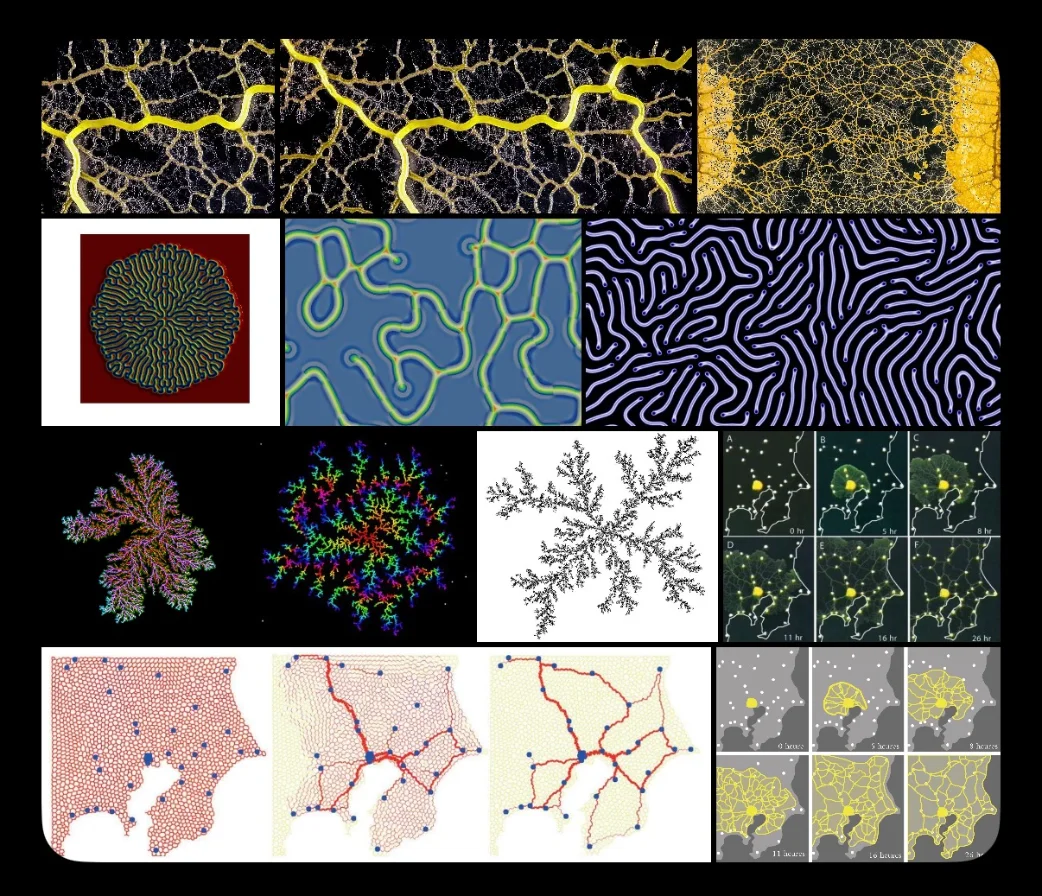
A collaborative mural inspired by deimatic display in animals. Imagining how an emergent digital entity in the real world might try to attract the attention of passing humans.
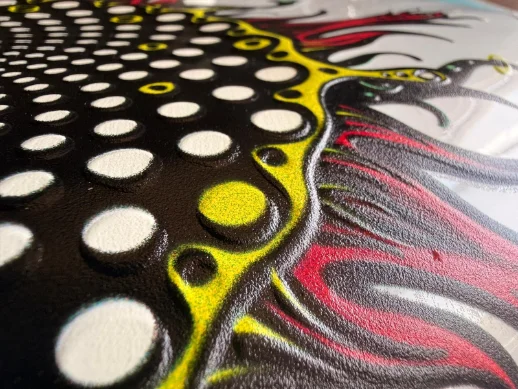
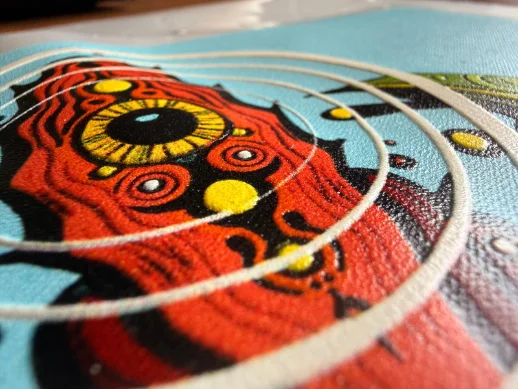
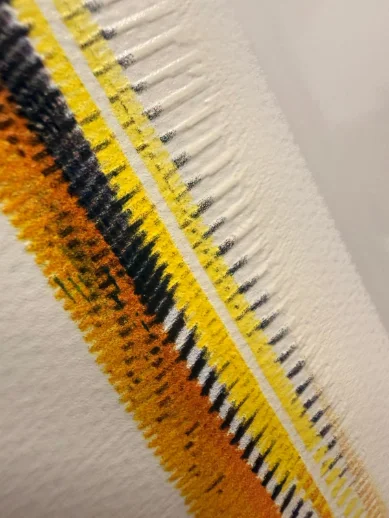
Sits at the centre of the portal form — the piece the students co-design in Workshop 1. "2.5D" — a DXonJet relief print (real raised texture, not just flat colour), not a flat 2D mural. Approximate pricing confirmed: £85 per square metre.
AR overlay animates the marker scene via Zappar XR — no app required. A site speed test (21 July) clocked ~148 Mbps down / ~3 Mbps up / 30ms latency, so connectivity is no longer a constraint on richer content.
Hidden braille poetry
Explore working braille into the mural's relief texture itself — a hidden poem or line of text, discoverable and readable by touch. Must sit within reach (height TBC once mural position is fixed). A genuine accessibility layer and a hidden-discovery element.
Still unknown: UV resistance of the ink long-term outdoors · graffiti-proof covering (available/needed?) · substrate options and sealing for permanent outdoor installation · mounting method into the final sculpture · lead times for full-size marker vs. small prototype.
Deimatic display
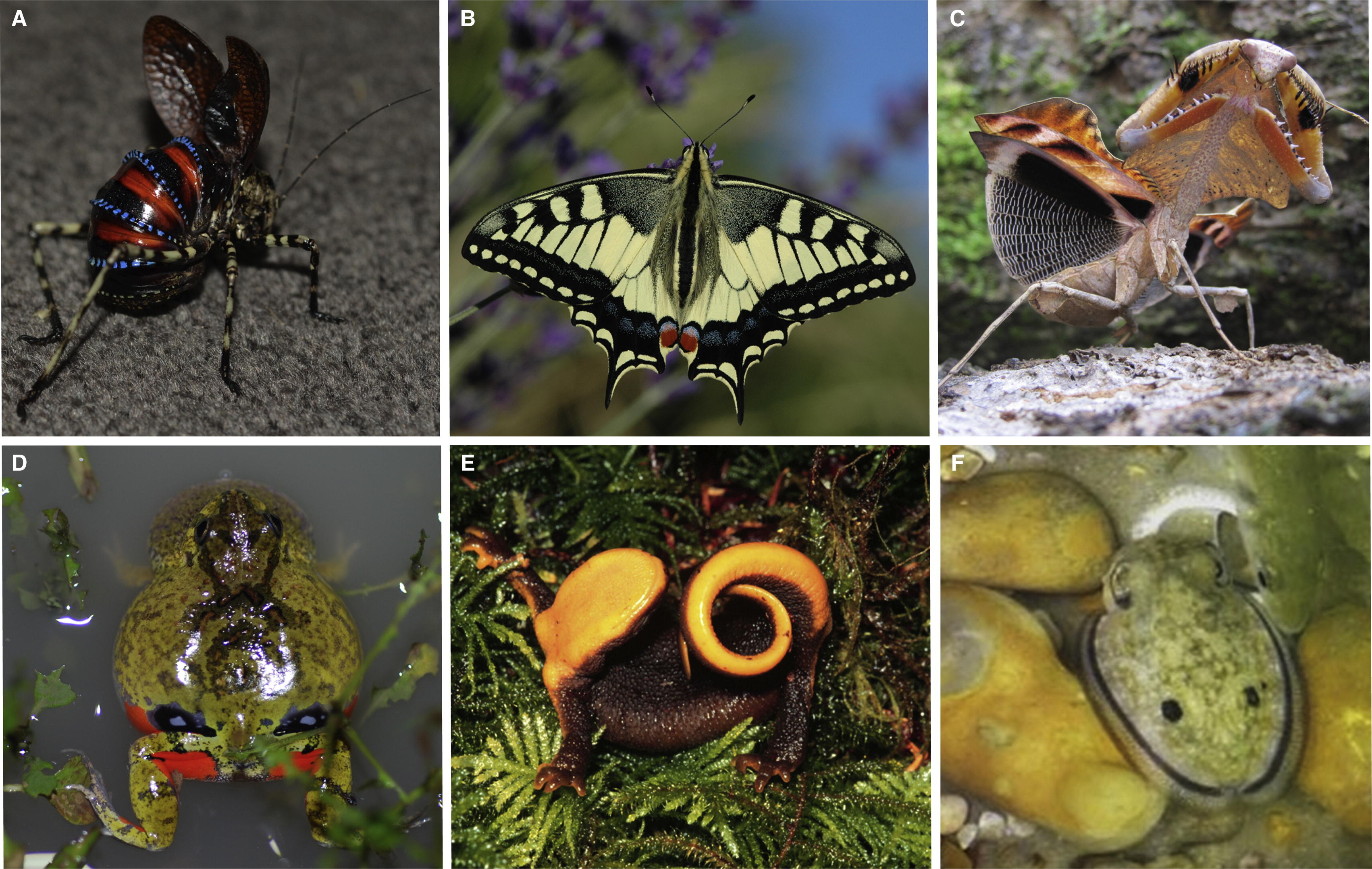
A deimatic display is a startle response — an animal suddenly reveals hidden colour, pattern or shape to scare off a predator or draw a curious eye at exactly the wrong (or right) moment. Peacock butterfly eyespots, mantis wing-flashes, frog throat pouches: forms built purely to seize attention. The mural's reaction-diffusion pattern borrows that same logic — an emergent, unnatural, natural-looking pattern designed to lure a passing human off the path and through the gate.
Testing so far
Small-scale relief print tests via Murality's DXonJet machine — roughly dinner-plate sized, confirmed working now. Further testing needed on weatherproofing — long-term outdoor durability of the relief print not yet verified with real samples. But we're confident it'll be robust.

3D PRINTED SOLUTION — DESIGN LANGUAGE
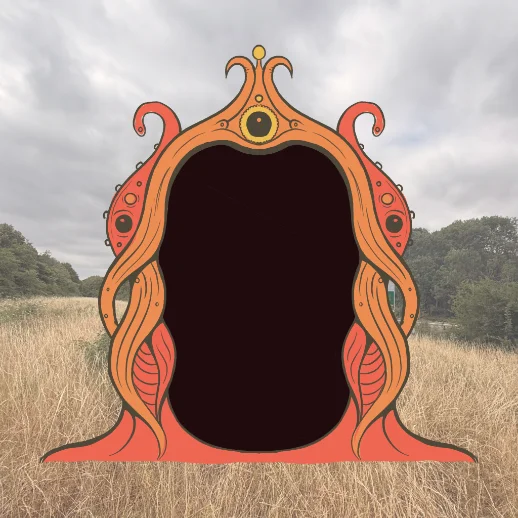
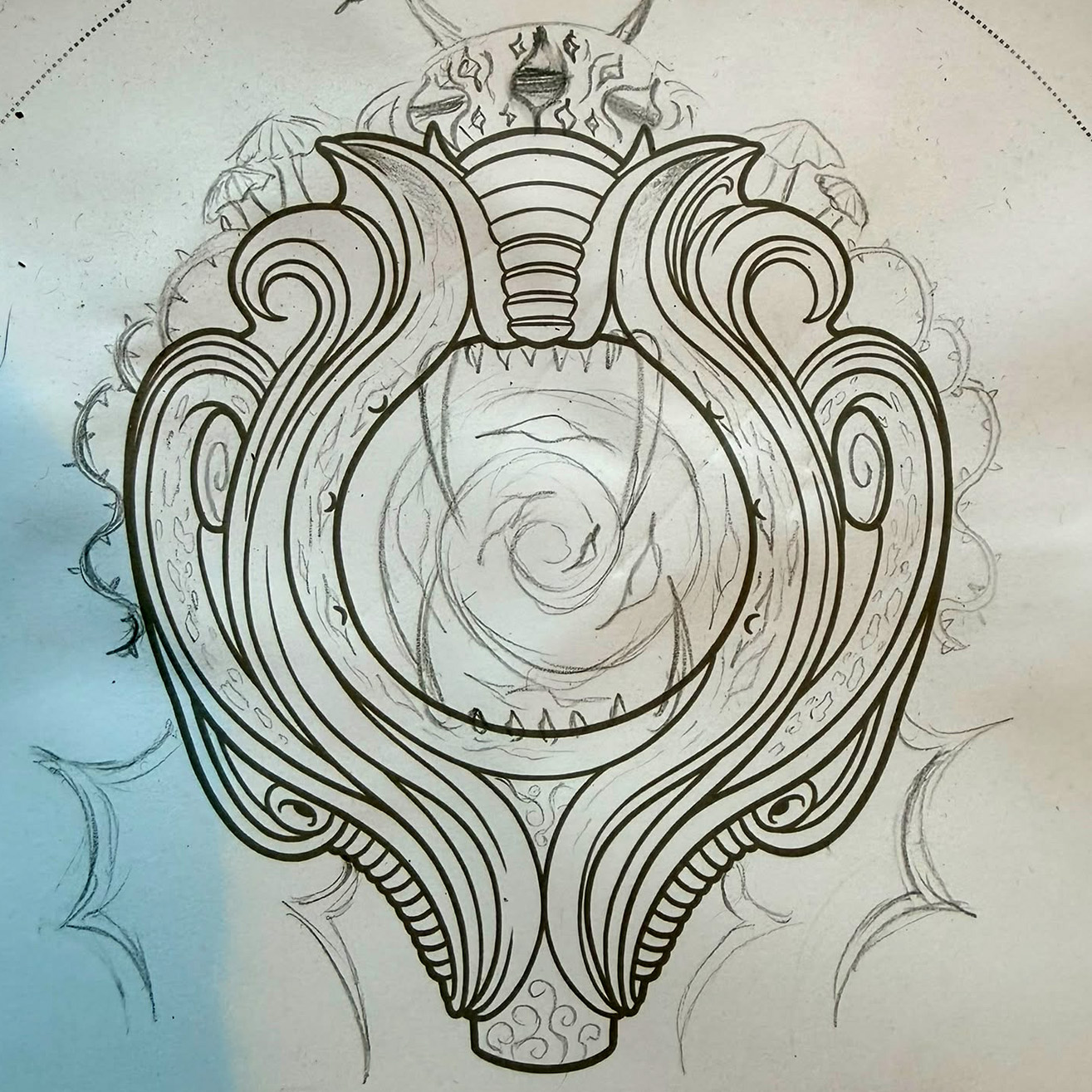
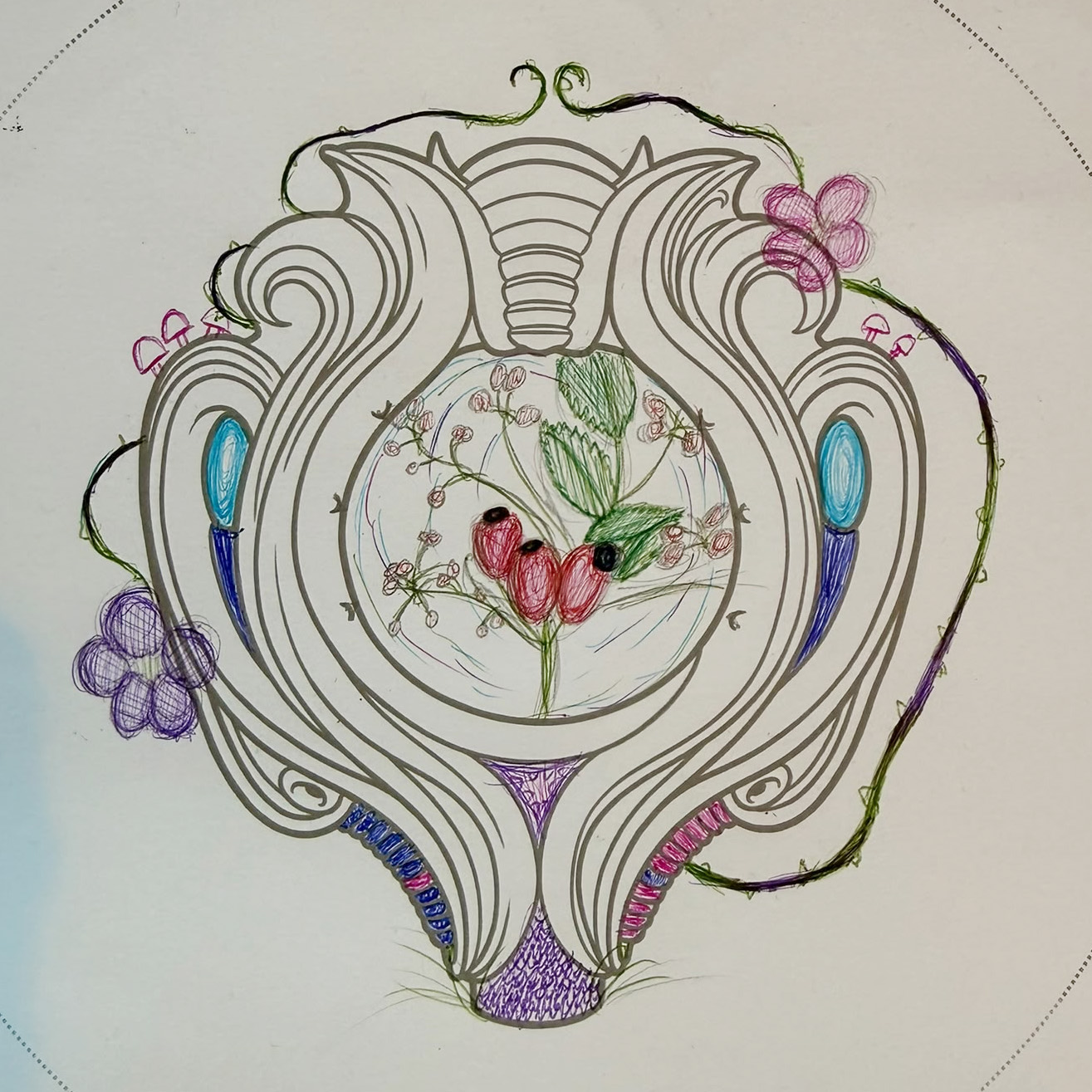
The ornate, organic frame carrying the marker — spines, ribs and flowing curves cast in dark resin, holding the reaction-diffusion pattern like a lens set into a socket. This render establishes the sculptural language the steel/resin hybrid frame will follow at full scale.

VISIT FROM ANYWHERE IN THE WORLD!
Because the sculpture is being designed as simpler, flatter steel-plate forms, it also produces a clean, optimised 3D model suitable for the web. Plan: a full digital twin of the sculpture, hosted on the project webpage, including a web-based AR feature — visitors anywhere in the world can open the page on their phone and place the sculpture in their own garden, at true scale, via their camera. Extends the reach of the piece well beyond a single physical site visit.
NENE PARK ACADEMY - SCHOOL WORKSHOPS
Two full-day sessions, separate Wednesdays in September, 2 weeks apart.
12 Year 9 students, supported by sixth-form student leaders.
Site, small nature, mural design
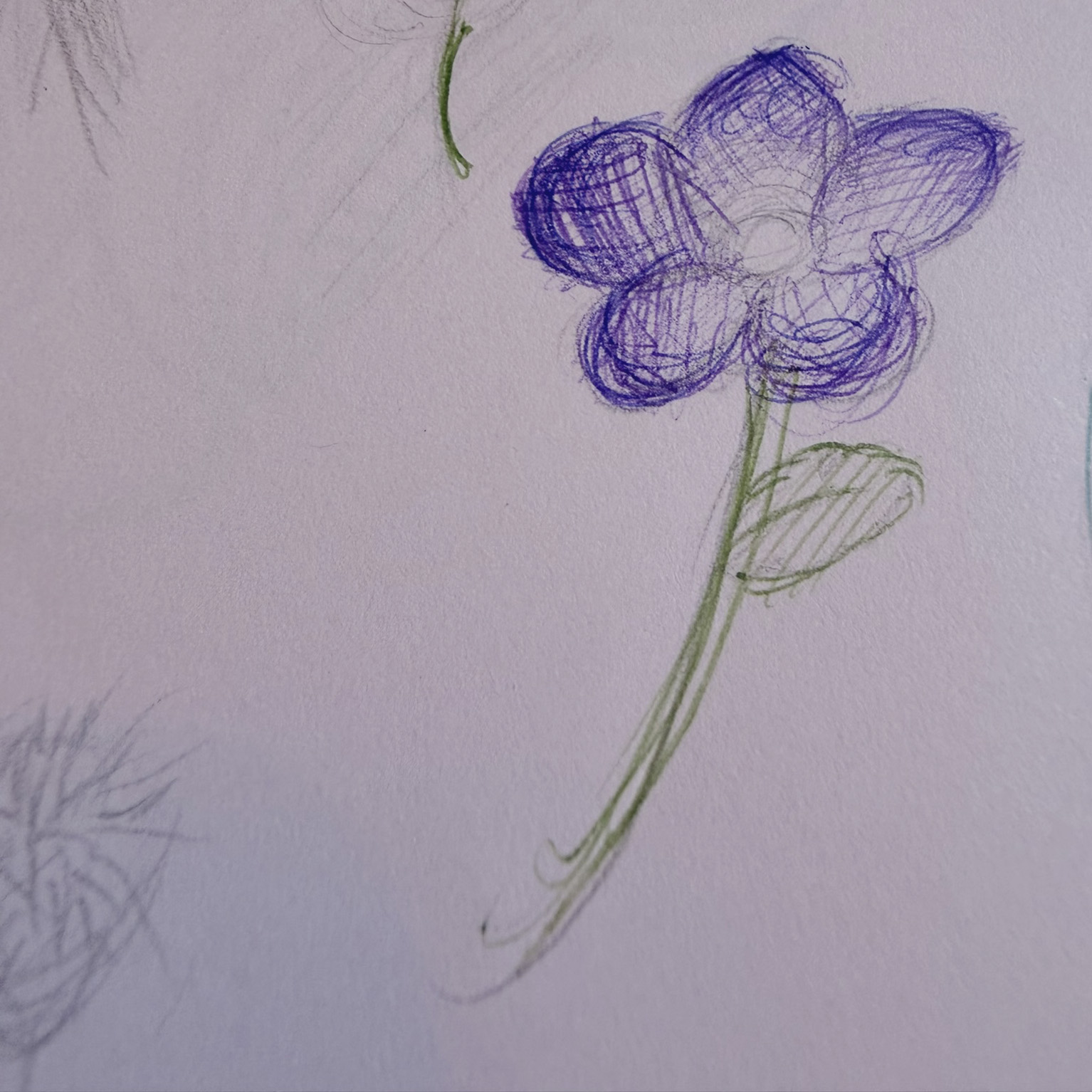
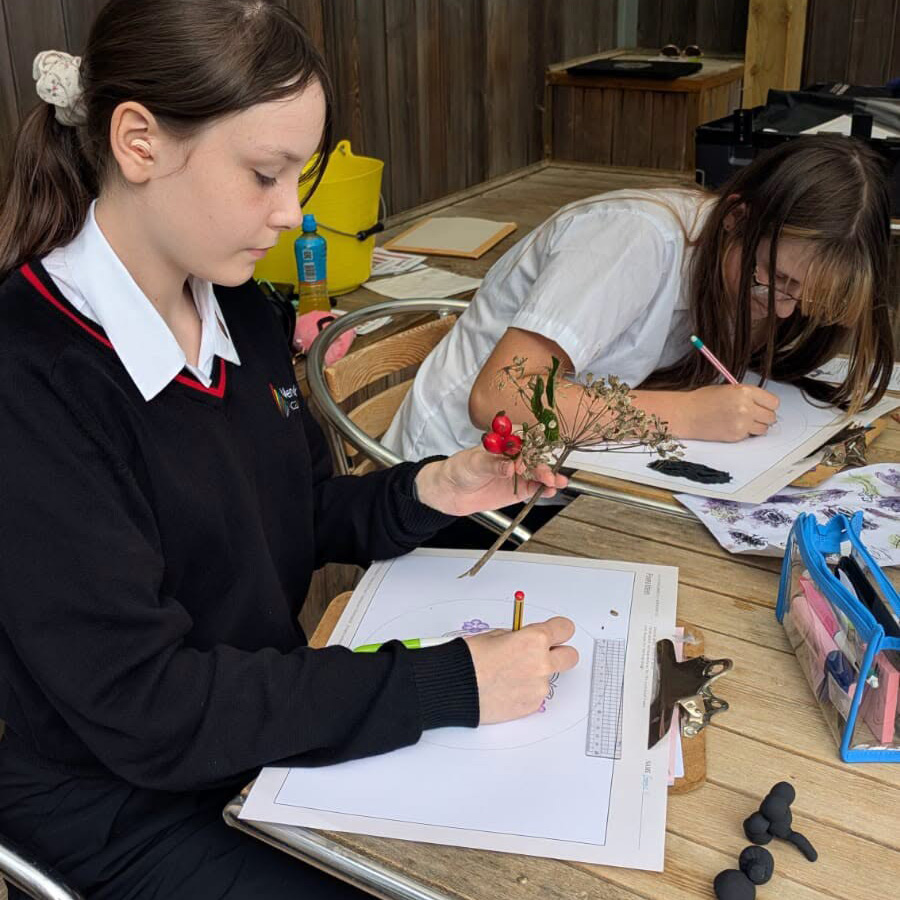
Thorpe Meadows Cafe, 14–15 people. Morning: intro to Lee's practice & the current concept, then a nature walk around the lake gathering photos, microscope/endoscope shots, and drawings for the AR marker artwork. Afternoon: a three-strand rotation — The Lure mural sketching, clay/texture rubbing for the sculpture's Frame, and a Gravity Sketch / Quest headset rotation walking pairs through how the 3D concept was built. Wraps with group feedback that shapes Workshop 2.
VIEW FULL WORKSHOP 1 PLAN ↗3D painting workshop
Feedback on incorporation of student elements. Presentation of final frame design. Focus on introducing MultiBrush for a conversation about the hypnotic spiralling portal that will open via AR.
Bonus NFC tag intro and gift.
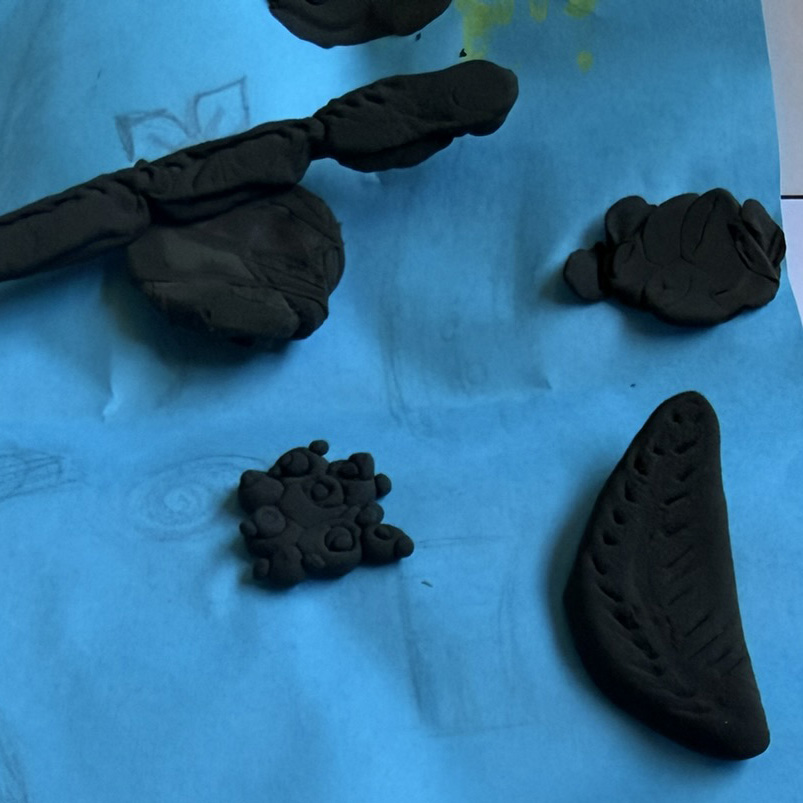
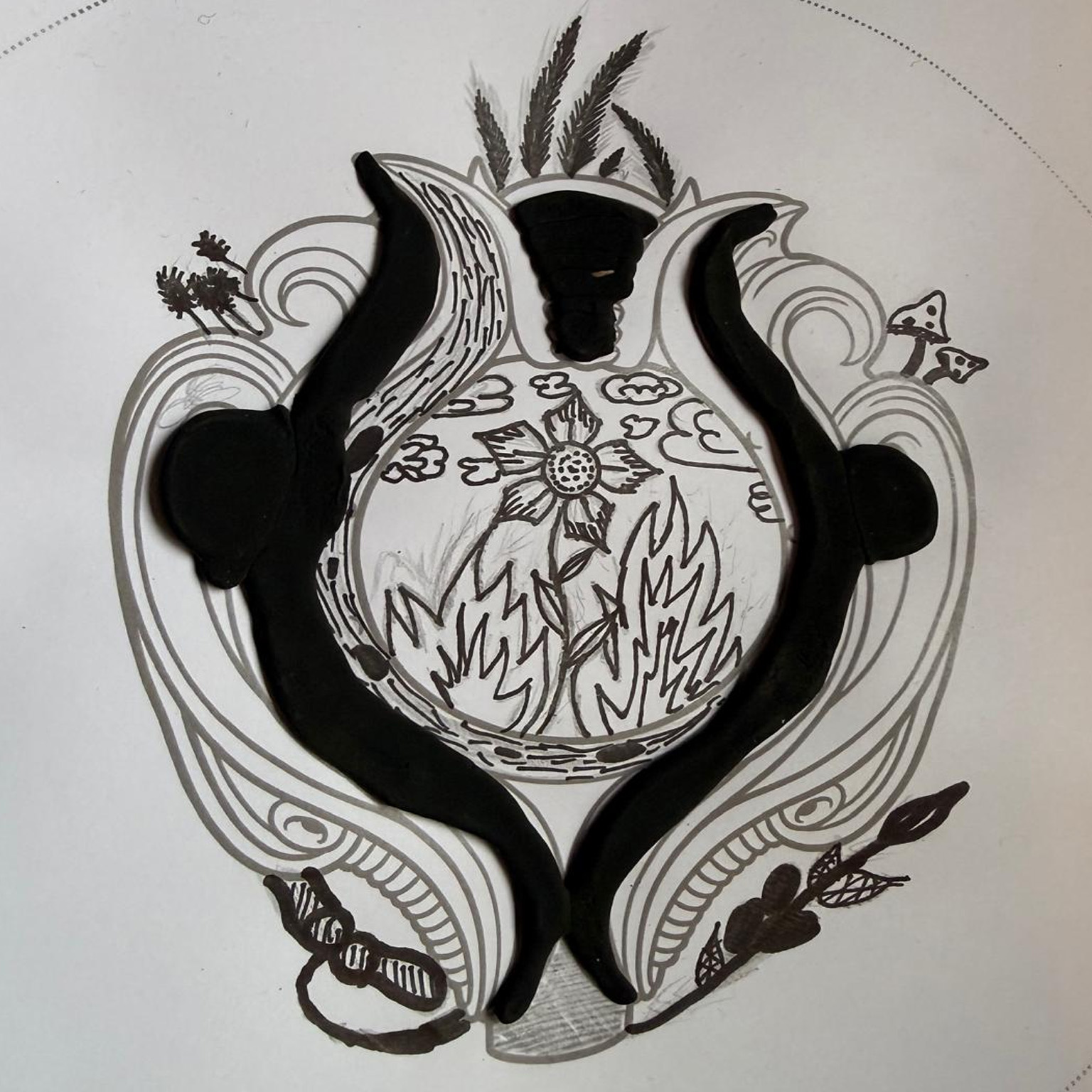
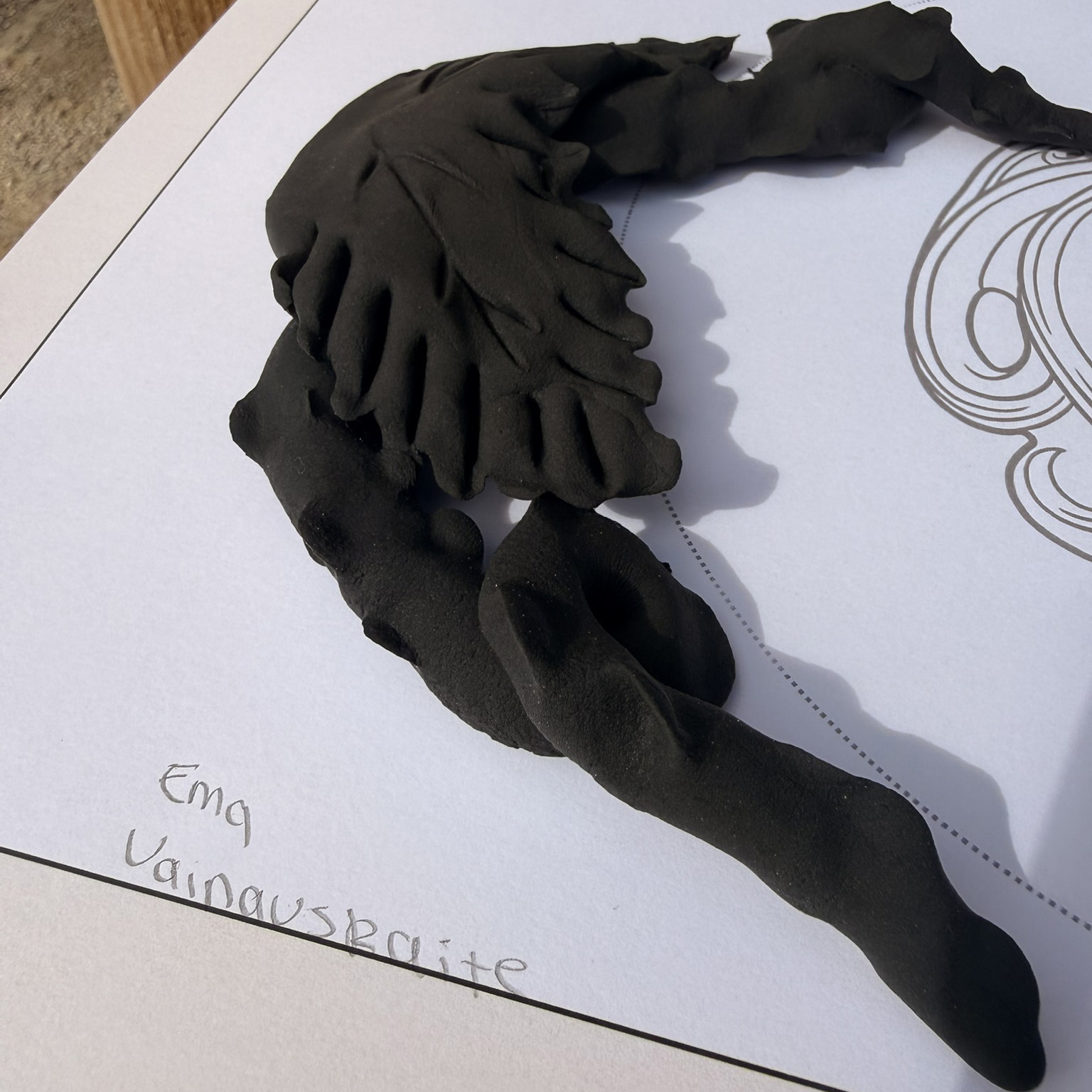
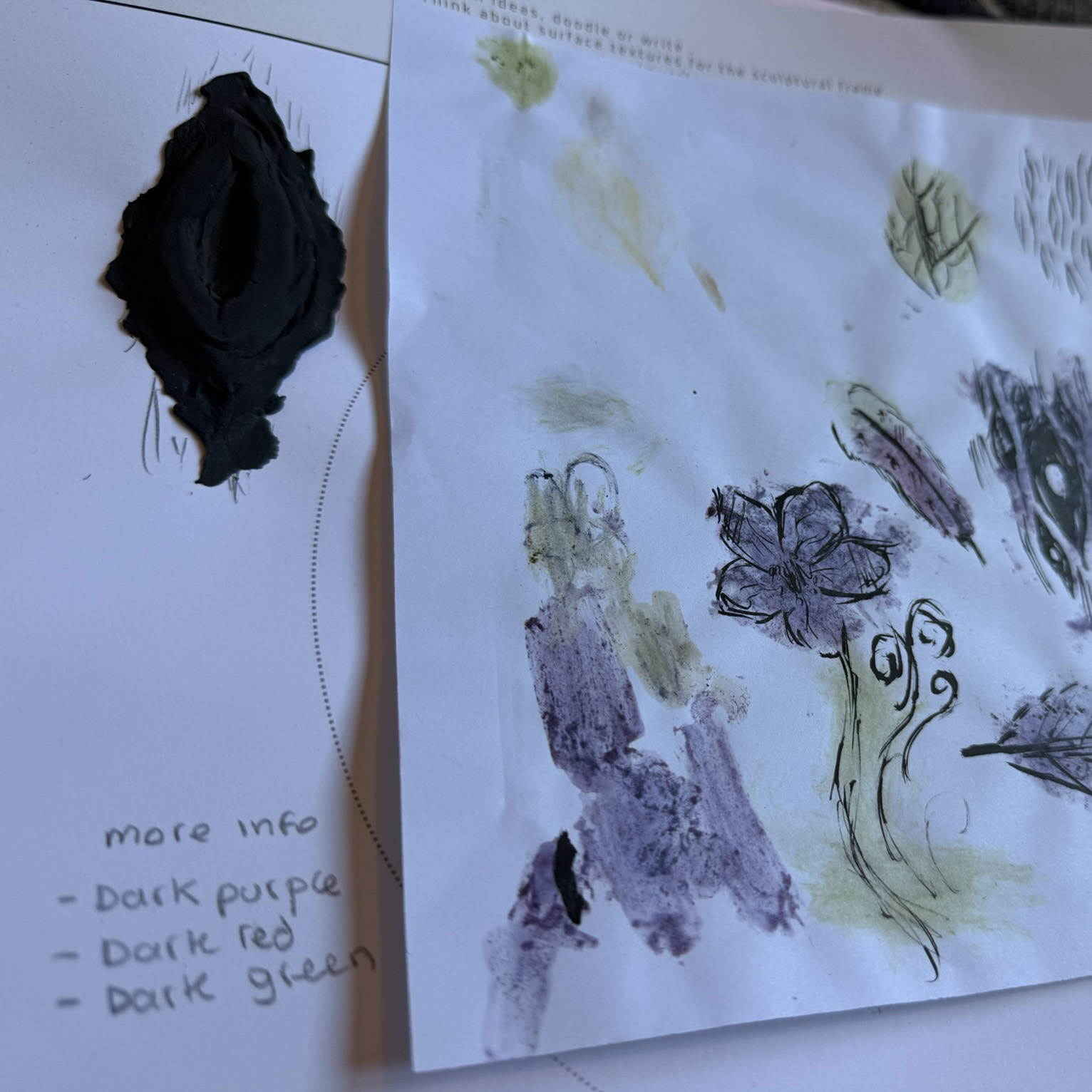
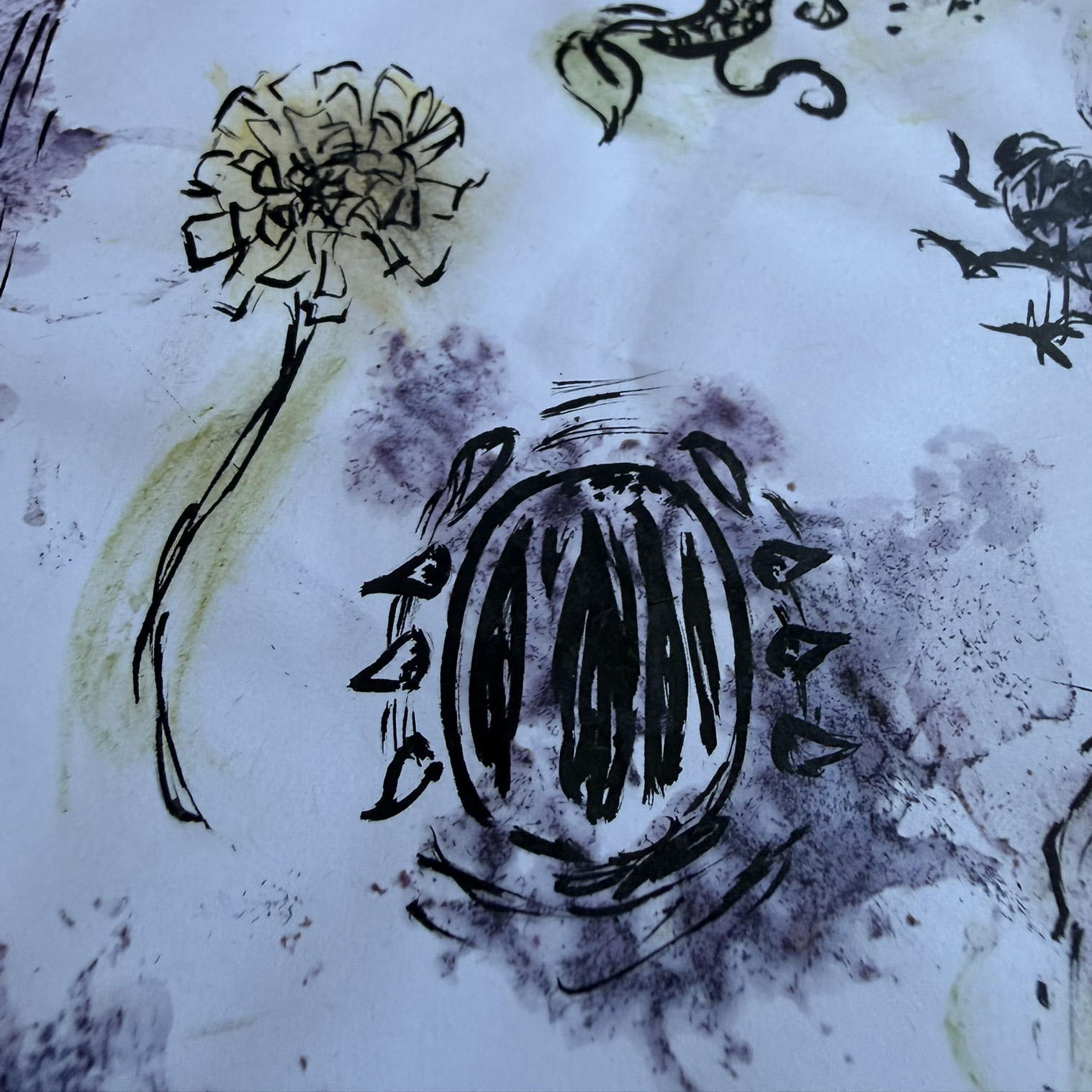
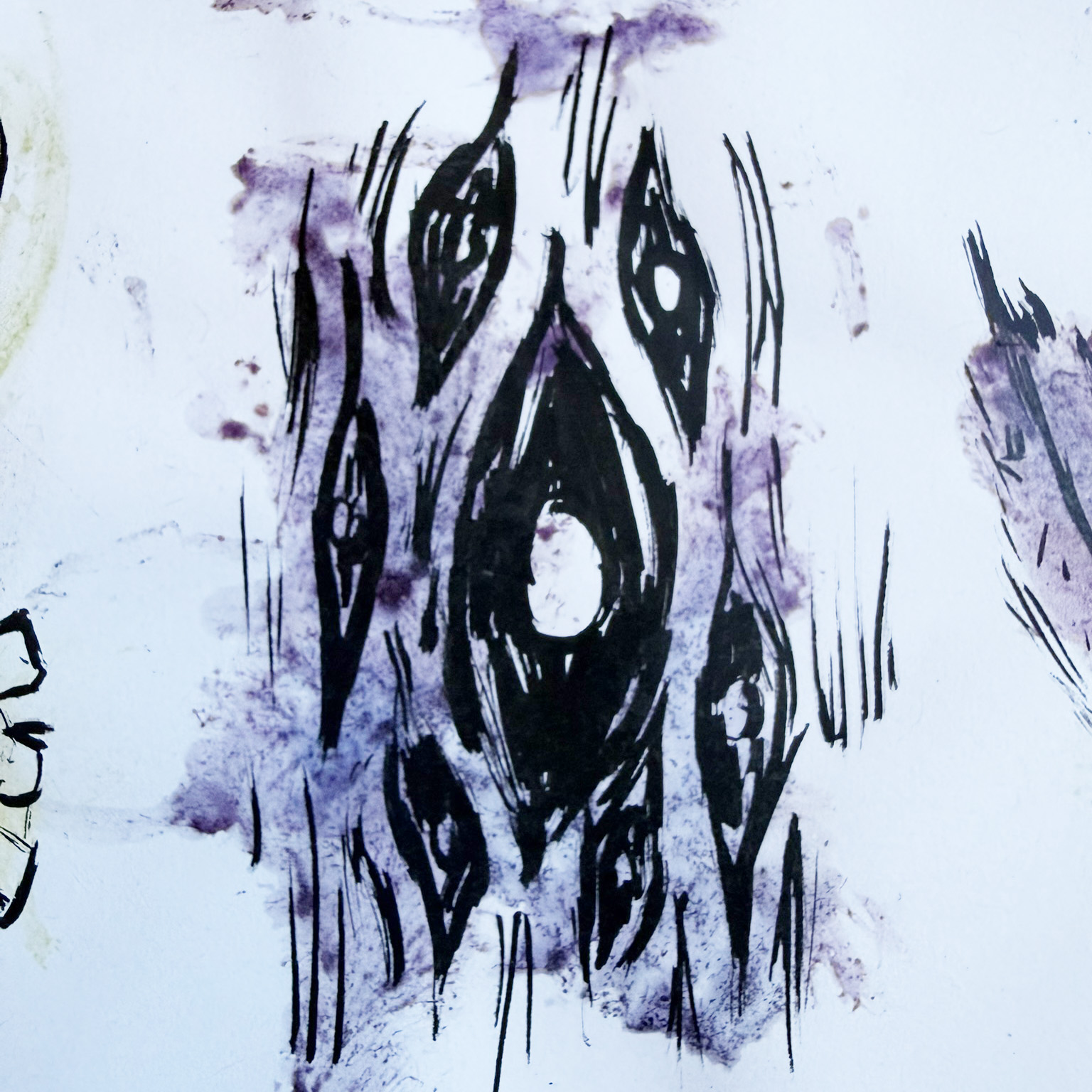
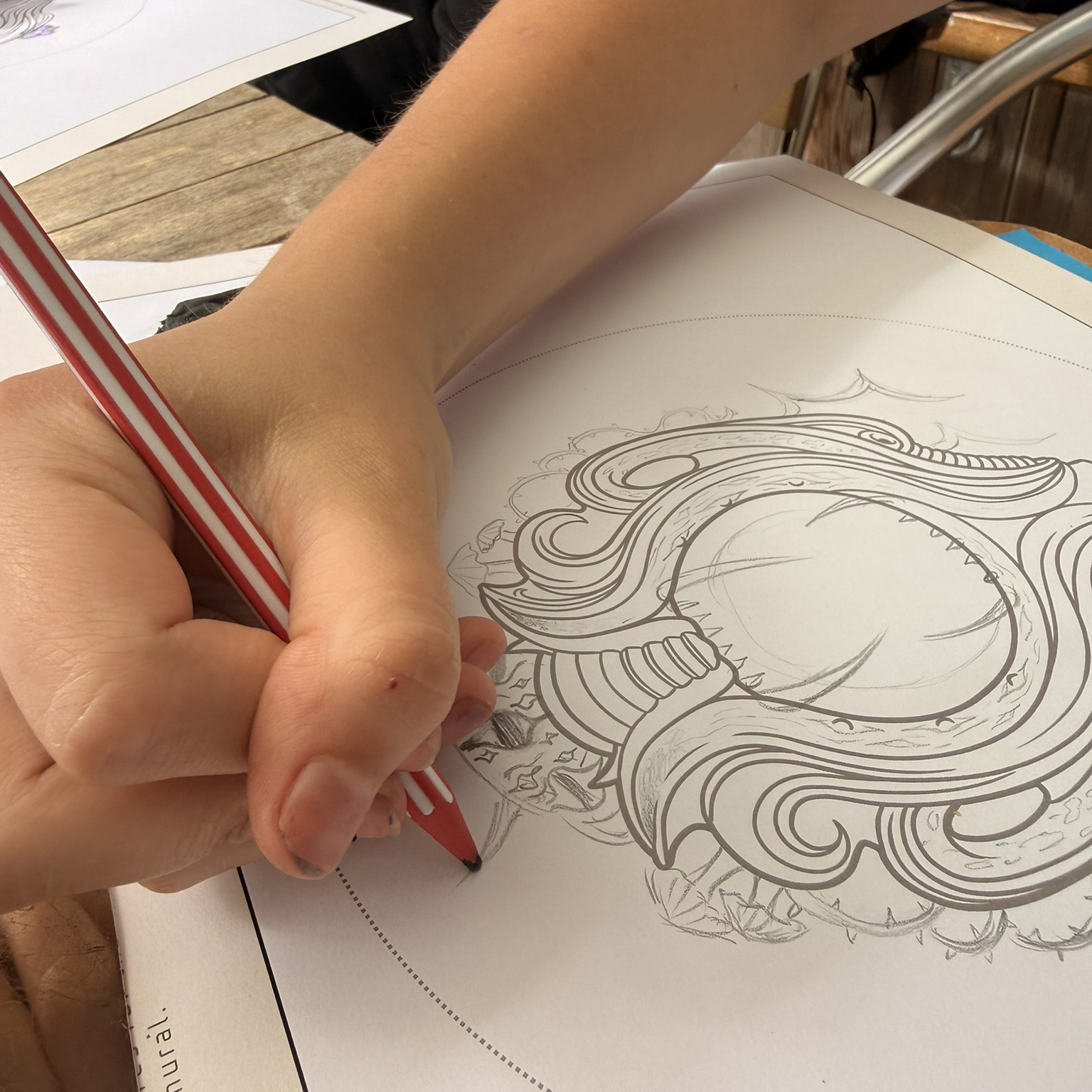
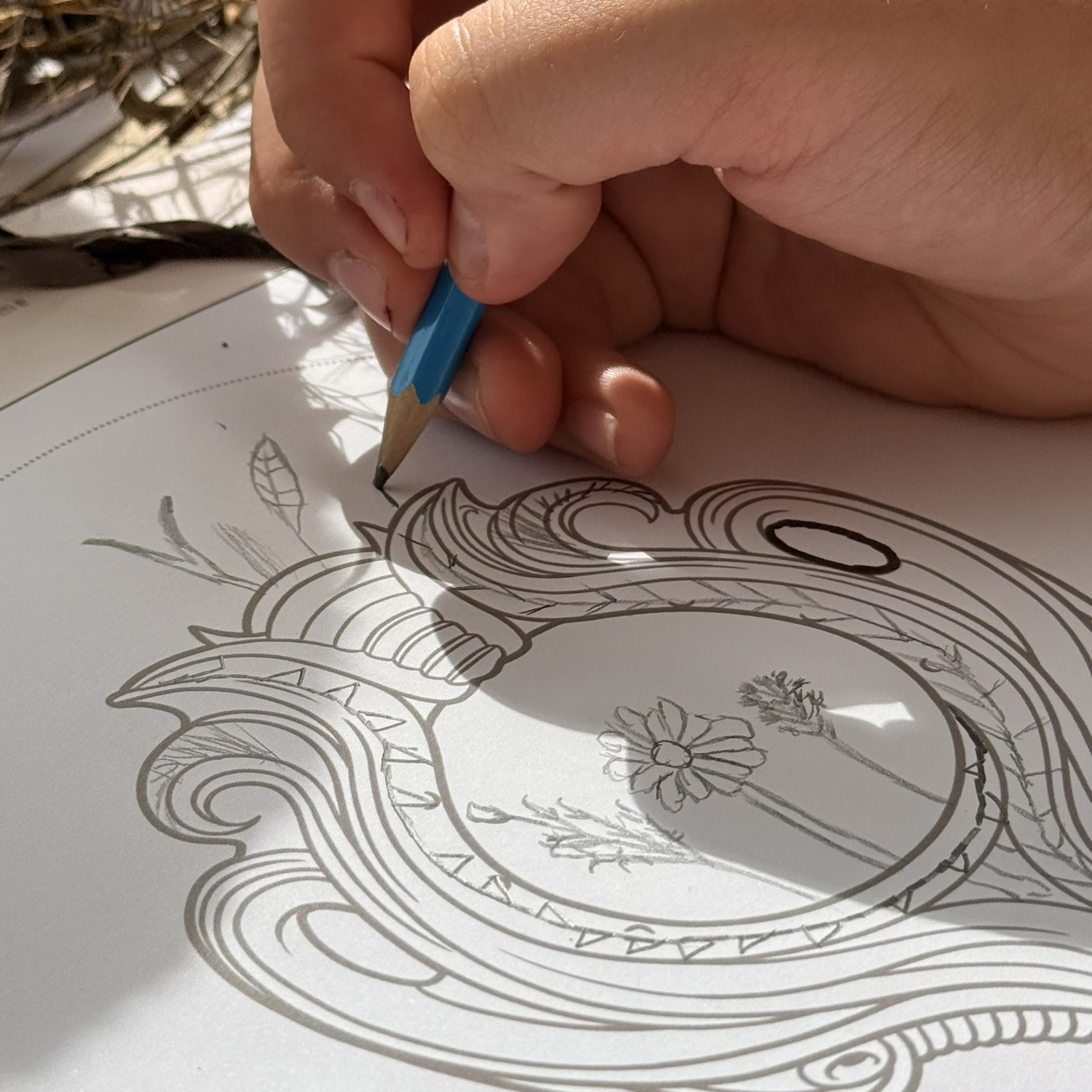
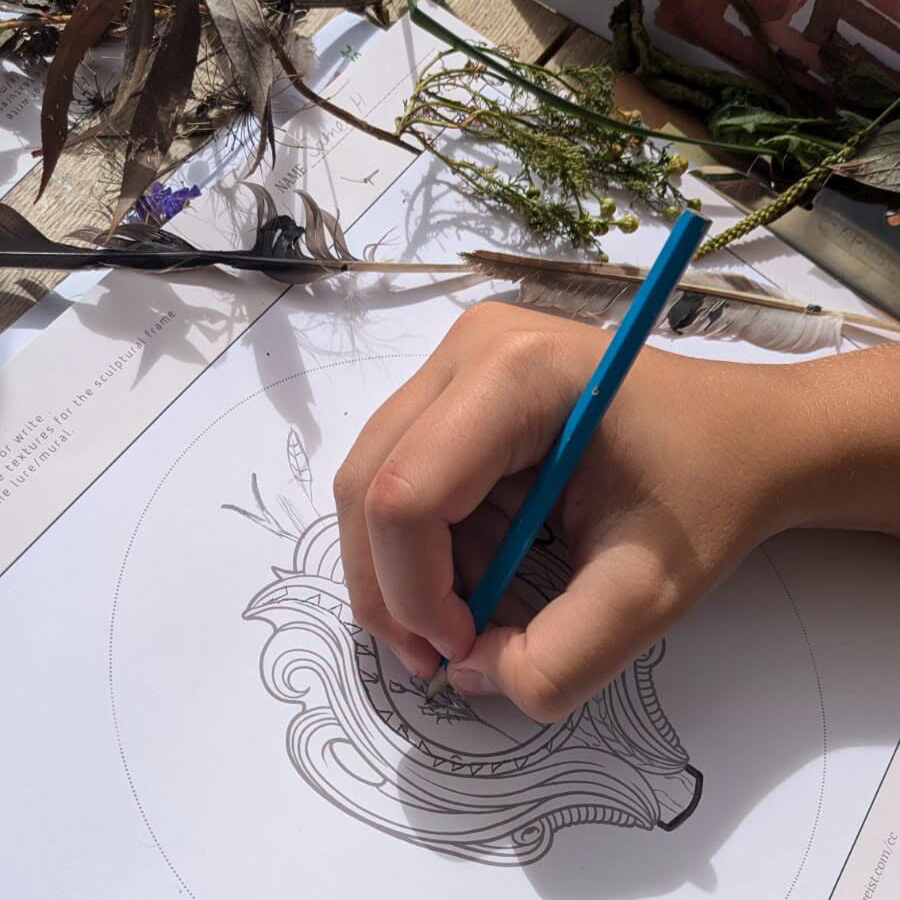

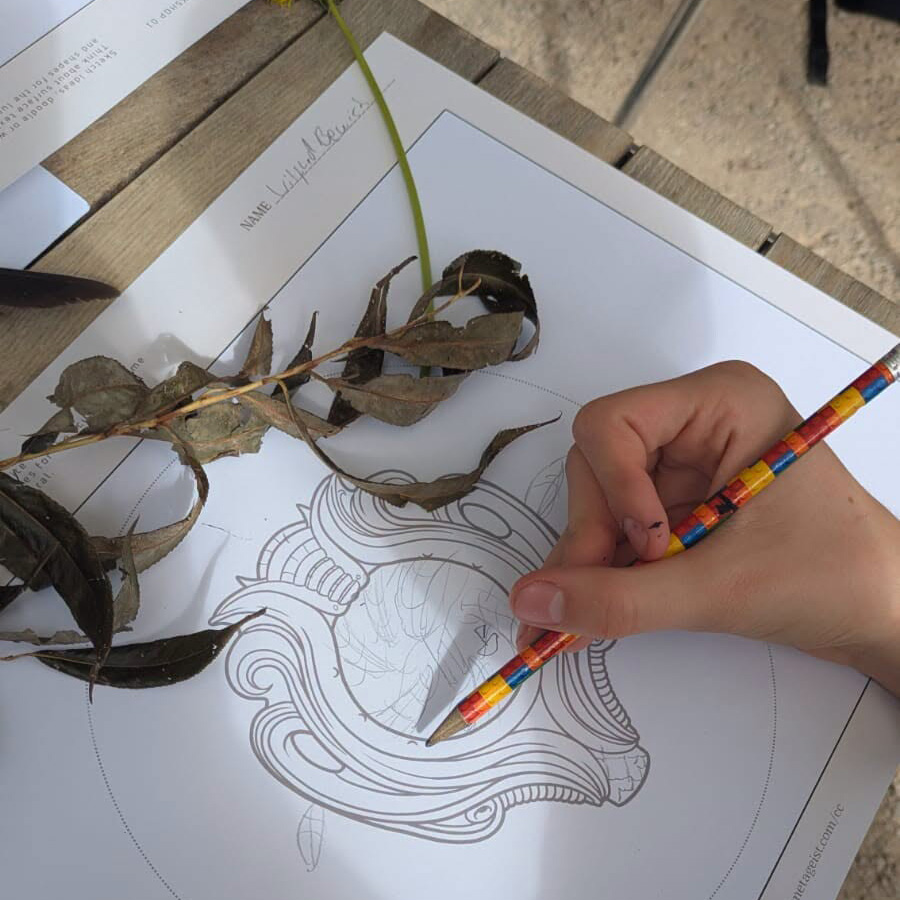
Given the topic will likely come up, Lee plans to be upfront about using AI at different points in the process: it's a tool, not inherently good or bad — that depends on how it's used. Outsourcing genuine creativity and imagination to it is a poor use, leading to work that doens't feel at all accomplished; using it to handle repetitive, technical or time-consuming work, or to help stay organised, is a good one. Using it where it isn't actually needed is also a poor use. Keeping these tools open and accessible for genuine, conscious experimentation — rather than solely in the hands of large corporations — matters too. Artists have an urge, and some might say "a responsibility" to engage with, explore and critique new technologies.
BUILDING THE SCULPTURE
50% plant-based resin which doesn't leach into the environment
Coloured glass, or a comparable material, set into holes in the design so sunlight shines through from behind — a glowing, bioluminescent/firefly-like effect at golden hour. A small beacon-like element positioned high up, visible from the road.
❓ Final form, exact size and visual design. ❓ Fixing/foundation method and site security.
LAUNCH EVENT ON SITE
Weekend afternoon art event. Ideas:
Other artists invited to paint on boards alongside the piece.
NFC enabled AR plinths.
Drinks at The Boathouse.
ON-SITE & BEYOND
Platform: Zappar XR (image tracking) — no longer constrained by connectivity given the strong on-site speed test. AR overlay animates the mural scene — 3D animated content triggered by the marker, sprouting from anchor points on the physical structure and reaches back like a magic tunnel.
Sound: explore audio that reflects the site — field recordings? Student-made sounds? (Workshop 1 discussion feeds this.)
❓ Hosting, QR/NFC/signage on-site, and how visitors discover the AR layer. ❓ Ongoing maintenance of the AR experience after handover — the overlay can be updated remotely relatively easily, so this doesn't have to be a one-off, fixed piece — it could evolve over time.
THIS PAGE, HOSTED
This master document feeds a hosted HTML version — a live, transparent window into the work-in-progress for Nene Park Trust and other collaborators. Includes documentation, images, behind-the-scenes material, and the 3D web walkthrough and digital twin/AR viewer (see §07/§05). Replaces scattered email updates; eventually shared with the public.
❓ Hosting location, update rhythm, and what stays private vs. public.
WORKING BACKWARDS
RISKS & OPEN QUESTIONS
▸ Large-scale relief "easel" not ready until end of August — build in trial time once it lands.
▸ £8,000 build budget must stretch across fabrication, materials and print — as well as the AR elements ideally — fabricator quotes will make or break it. Possible sponsorship with Photocentric might be an opiton? They need a 3D model asap.
▸ Weatherproofing claims to verify with real samples once Murality's machine is running. Mural test print currnelty in the sun and rain for short term comparison.
▸ On-site AR discoverability — signage and clear launch instructions needed (connectivity itself tests strong, ~148 Mbps down).
▸ Mural printer edge margins to factor into mural composition. Steel disc embedded in ornate resin "frame"?
▸ Workshop 2 structure still open.
▸ Installation date unconfirmed — October discussed as a target, not yet formal.
▸ Coloured glass/beacon element — sun orientation, safety and cost all unresolved.
22 Jul 2026 — Document created. Consolidates: application, contract review, first Sofija call, 10 July site visit outcomes, concept development, Workshop 1 plan, Murality visit, braille idea, printer research.
22 Jul 2026 — Concept refined: portal opening reframed as a 2.5D DXonJet-relief marker; reference works added; low-poly noted as a fabrication/budget necessity; budget corrected to £13,000 total / £8,000 build.
10 Aug 2026 — Full restructure into project-journey order. Added: 3D scope section, £85/m² relief pricing, weatherproofing note, braille idea, Digital Twin & Web AR section, all five fabricator contacts, 3D web walkthrough section, Workshop 1 additions, Workshop 2 open questions, AR-anchors concept, sunset acrylic/beacon idea, Celebration & Launch section. Green-flagged questions added throughout for the Sofija meeting.